Loading...
Loading...
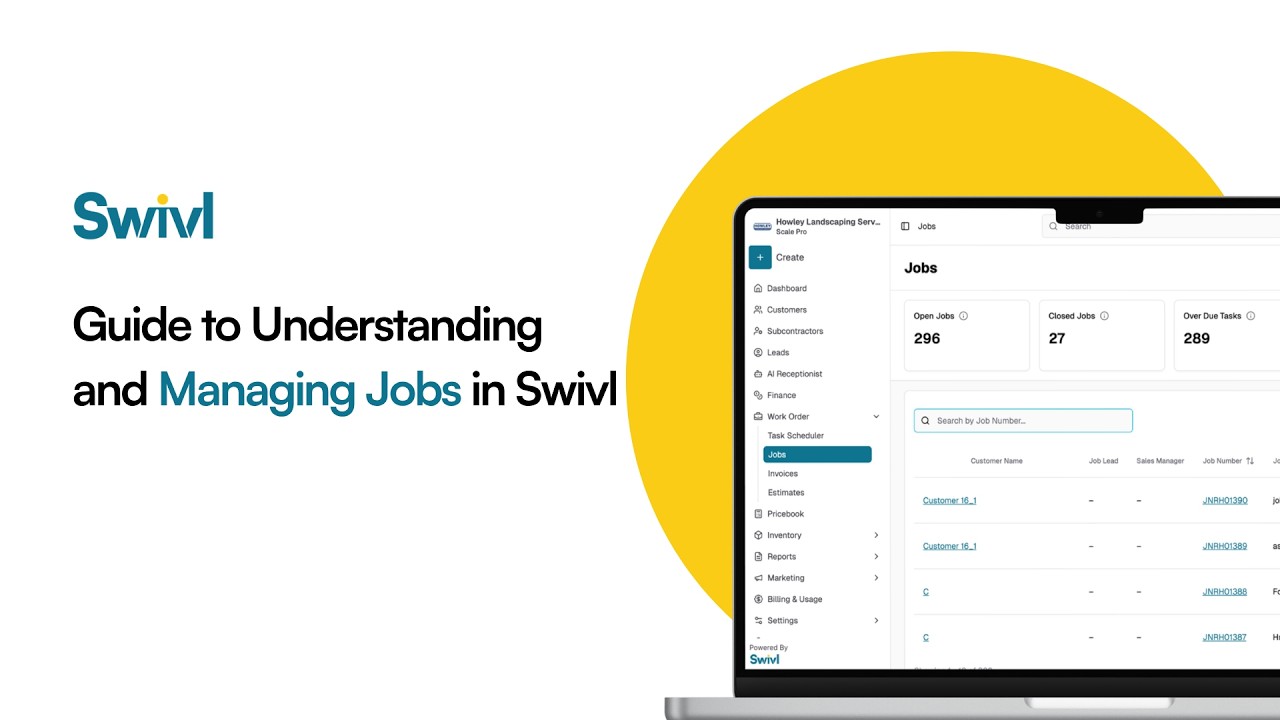
Everything in Swivl starts with a job, your central command center for every project.
In this guide, we’ll break down what a “job” really means in Swivl and how it helps you organize your entire workflow. Unlike traditional systems that revolve around a single invoice, Swivl gives you a complete project hub where you can manage estimates, invoices, tasks, costs, and all your job data in one place.
From tracking financials and assigning tasks to managing documents, notes, and activity logs, this is where your entire business operation comes together.
What You’ll Learn:
What a “job” is in Swivl and why it matters How jobs act as a central hub for your projects Managing estimates, invoices, and change orders Tracking tasks and field work Monitoring job costs and profitability Using notes, activity logs, and media Viewing and managing jobs on Web & Mobile
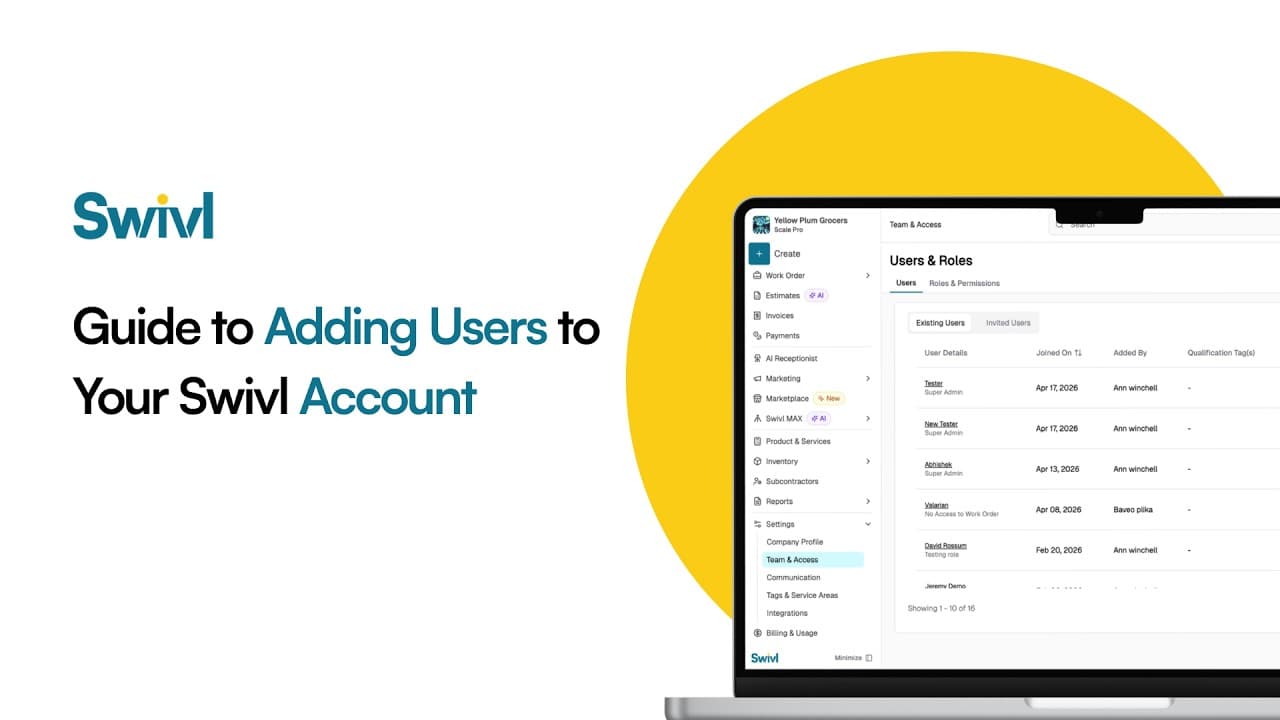
Learn how to add users, technicians, dispatchers, and office staff to your Swivl account in this complete user management tutorial. In this video, Tyson walks you through how to invite new users, configure roles and permissions, set compensation details, and optimize labor burden settings for accurate job costing.
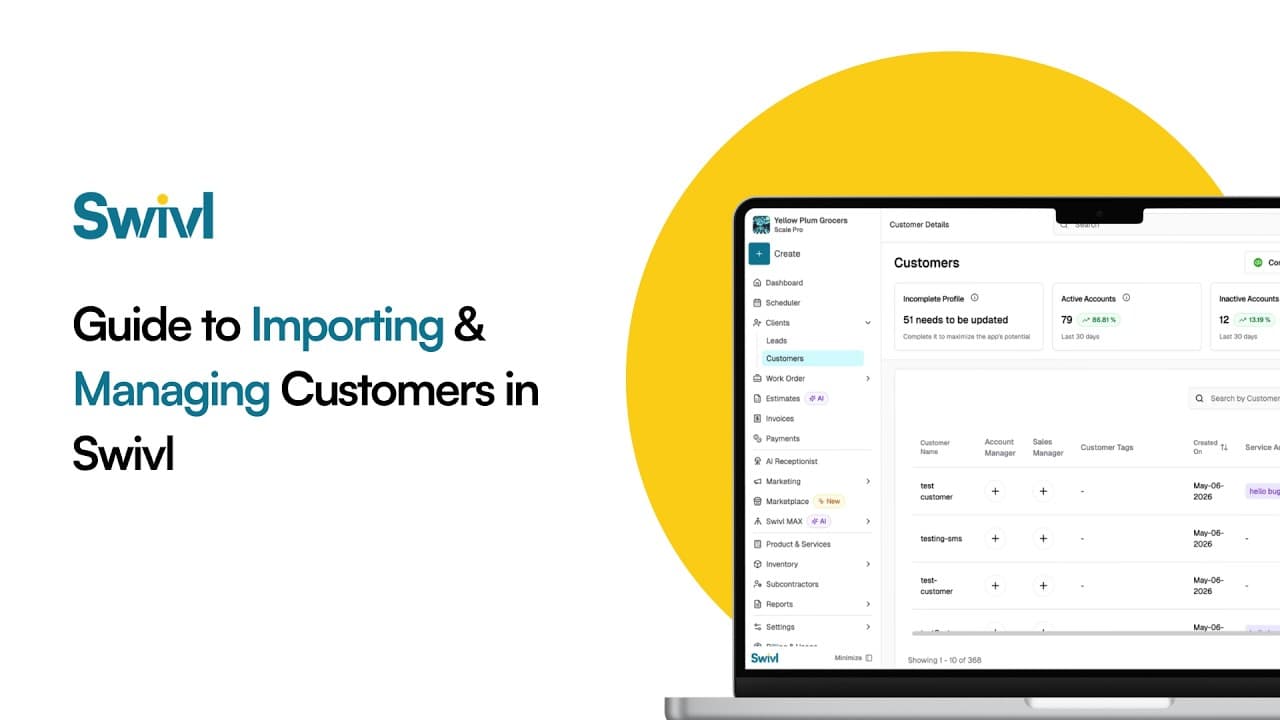
Learn how to add customers to your Swivl account using three simple methods, QuickBooks sync, CSV upload, and manual entry. In this tutorial, Tyson walks you through the complete customer import process so you can quickly organize your customer database and streamline your field service operations.
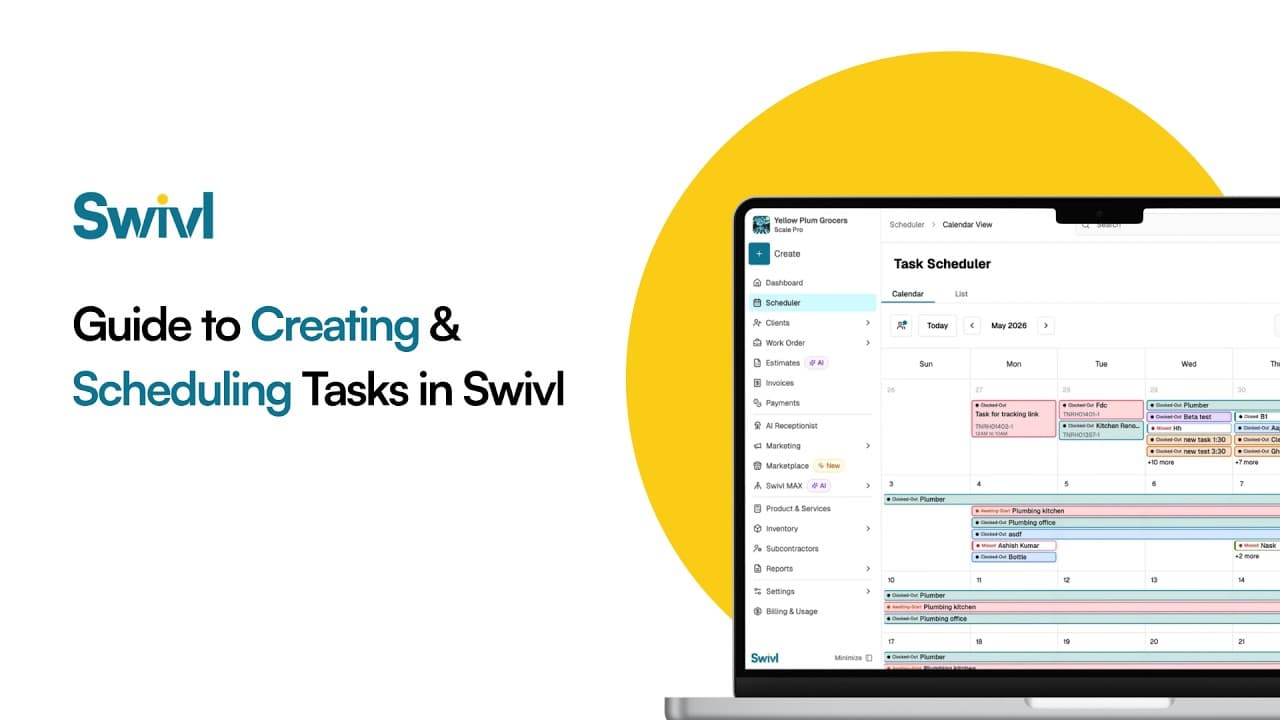
Learn how to create and schedule tasks in Swivl to streamline your field service operations and improve project management. In this tutorial, Tyson walks you through the difference between jobs and tasks in Swivl, how to organize customer information, and how field technicians can manage scheduled and unscheduled work more efficiently.
Start free. Unlimited users, no card, nothing expires.